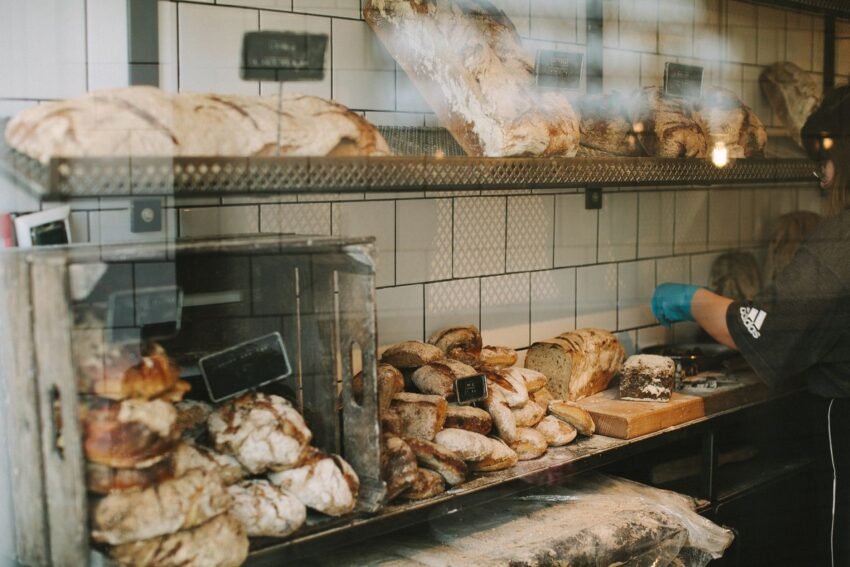
For thousands of years across Western and Eastern Europe, bread was never treated as a mere side dish or secondary carbohydrate. It was the absolute core of life—the primary source of calories, the anchor of the household, and a sacred link to community and faith.
At the center of this culinary lineage is sourdough: a natural, wild-fermented mix of flour, water, lactic acid bacteria, and wild yeasts. Long before commercial industrial yeast was isolated in the late 19th century, sourdough was simply how Europe baked bread.
The Living Heirlooms: Starters Passed Across Generations
Sourdough relies on a “starter” (levain, Sauerteig, or lievito madre)—a living ecosystem of wild yeast and beneficial bacteria cultivated through regular feedings of flour and water.
Because these starters require constant care to survive, they became cherished family heirlooms. In rural European communities, starters were passed down from mothers to daughters, given as wedding gifts, and carried across oceans by emigrating families as a living piece of home.
-
Germany (Brotkultur): Germany recognizes over 3,000 distinct regional bread varieties, most rooted in dense rye sourdoughs (Roggenmischbrot). German bread culture (Brotkultur) is so foundational to national identity that it was added to the German UNESCO Inventory of Intangible Cultural Heritage in 2014.
-
France (Pain de Campagne): The iconic country loaf represents the rural hearth. French bread laws still protect artisanal techniques, requiring traditional bakeries (boulangeries) to ferment dough slowly without artificial additives.
-
San Francisco Connection: When European gold prospectors migrated to California in 1849, French and Basque bakers brought their wild sourdough techniques, establishing the world-famous San Francisco sourdough style using the endemic wild bacteria strain Lactobacillus sanfranciscensis.
Sourdough Regional Traditions Across Europe
European sourdough styles mirror local climates, native grains, and agricultural history:
| Region / Country | Signature Bread | Grain Base | Cultural Significance & Flavor Profile |
| Germany & Nordics | Roggenbrot / Rugbrød | Whole Rye | Heavy, dark, highly acidic bread built for long winter storage and dense nutrition. |
| France | Pain au Levain | Wheat & Whole Wheat | Open crumb, crisp blistered crust, balanced mild lactic acidity. |
| Italy (Puglia) | Pane di Altamura | Durum Wheat (Semola) | PDO-protected ancient Italian loaf with a thick golden crust and vibrant yellow crumb. |
| Russia & Eastern Europe | Borodinsky Bread | Rye with Coriander & Molasses | Dark sourdough spiced with coriander seeds, deeply tied to military folklore and national endurance. |
The Chemistry of Digestibility
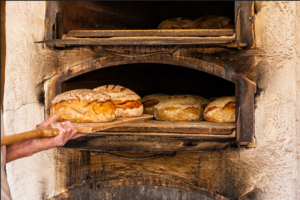
The slow fermentation process of sourdough—often taking 12 to 24 hours—does far more than build complex flavor. The lactic acid bacteria lower the dough’s pH, breaking down phytic acid (an anti-nutrient in grains that blocks mineral absorption). This long fermentation effectively pre-digests gluten proteins, making authentic sourdough noticeably easier on human digestion than fast-rising commercial loaves.
The Bread as a Sacred Symbol
In European folk traditions and religious rituals, sourdough bread was protected with reverence. In many Slavic and Balkan cultures, guests are greeted with bread and salt (Khleb-Sol) as the ultimate sign of hospitality and respect. Before slicing a loaf, elders would trace a cross on the bottom crust with a knife as a prayer of gratitude.
By reuniting simple flour, water, and time, modern sourdough bakers carry forward one of humanity’s most enduring cultural legacies—proving that bread remains the true soul of the table.