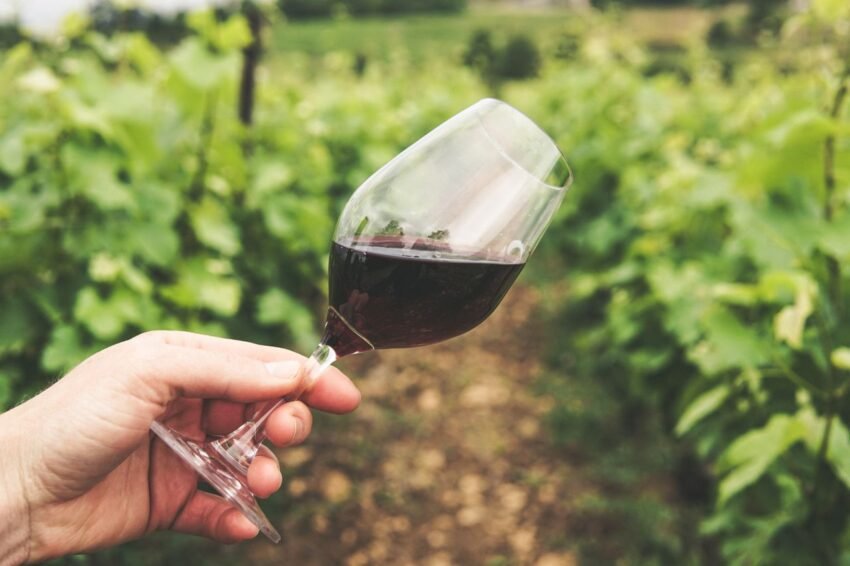
Few concepts in gastronomy carry as much romance and scientific complexity as terroir (pronounced ter-wah). Derived from the French word for earth (terre), terroir describes the complete natural environment in which a wine is produced—including soil composition, climate variations, topography, and human winemaking tradition.
Rather than tasting simply like fermented grapes, a great wine acts as a liquid snapshot of a specific place and time, capturing the sun, rain, and bedrock of the hillside where its vines took root.
The Four Pillars of Terroir
The interplay of four primary environmental and cultural drivers determines how terroir reveals itself in the glass:
1. Climate and Microclimate
-
Macroclimate: The overall region’s weather profile (e.g., Mediterranean, Continental, Maritime). Cool climates produce grapes with lower sugar and higher acidity (crisp Riesling, Pinot Noir), whereas warm climates yield higher sugar levels, lower acidity, and bolder alcohol content (bold Cabernet Sauvignon, Syrah).
-
Microclimate: The unique atmospheric conditions of a single vineyard block or row—influenced by proximity to rivers, forest cover, or thermal wind corridors.
2. Soil and Bedrock
Grapes do not directly absorb flavor compounds from minerals in the soil; instead, soil chemistry dictates how vines absorb water and retain heat:
-
Chalk and Limestone: Excellent drainage and water retention (e.g., Champagne, Chablis), preserving high acidity and conferring crisp, mineral nuances.
-
Slate and Schist: Heat-retaining dark stone (e.g., Mosel Valley, Priorat) that reflects heat back to vines during cool nights, aiding ripening on steep riverbanks.
-
Gravel and Sand: Quick-draining soils that force vine roots to extend dozens of feet downward in search of water, resulting in concentrated fruit tannins (e.g., Bordeaux’s Left Bank).
3. Topography and Elevation
Slope orientation (aspect) governs sunlight exposure. In the Northern Hemisphere, south-facing slopes capture maximum solar radiation. Higher elevation introduces a wider diurnal temperature variation—hot days for ripening paired with cool nights that preserve natural acidity.
4. Cultural Tradition and Viticulture
Human hands serve as the interpreter of terroir. Decisions regarding pruning methods, irrigation practices, indigenous yeast selection, and aging vessels (oak vs. stainless steel) determine whether the natural landscape is highlighted or masked.
Mapping Terroir in the Glass
Comparing classic wine regions demonstrates how geology and climate translate into sensory traits:
| Region | Soil & Topography | Climate Profile | Key Grape | Resulting Wine Profile |
| Chablis (France) | Kimmeridgian seabed (limestone & fossilized oysters) | Cool Continental | Chardonnay | Bone-dry, flinty, high acidity, saline-like minerality. |
| Napa Valley (USA) | Volcanic tuff, alluvial fans, gravel | Warm Mediterranean with coastal fog | Cabernet Sauvignon | Lush, full-bodied, rich dark fruit, velvety tannins. |
| Mosel (Germany) | Steep blue and red slate riverbanks | Cool Continental with river reflections | Riesling | Low alcohol, vibrant acidity, aromatic floral & petroleum notes. |
| Barolo (Italy) | Tortonian & Serravallian calcareous marl | Continental with alpine foothills | Nebbiolo | High tannins and acidity, pale ruby color, aromas of rose and tar. |
Old World vs. New World Terroir Philosophies
The concept of terroir underpins the division between winemaking philosophies:
-
Old World (Europe): Prioritizes place over grape. Wines are labeled by region (e.g., Bordeaux, Chianti) rather than varietal, relying on strict legal frameworks to preserve historical terroir identity.
-
New World (Americas, Australasia, South Africa): Prioritizes grape varietal and winemaker expression. Modern cellar techniques allow winemakers to highlight fruit characteristics while adapting to dynamic climates.
Whether drinking an ancient-vine European classic or a high-altitude South American vintage, understanding terroir turns every sip into an exploration of earth, climate, and human history.