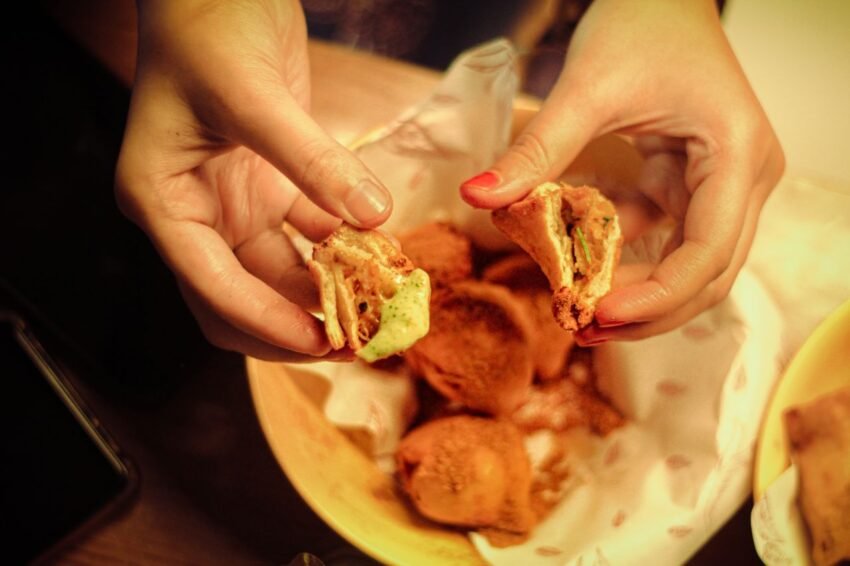
Few culinary items evoke as much comfort, history, and cultural resonance as the samosa. Whether served as street-side snacks wrapped in greasy brown paper in Delhi, paired with mint chutney at an upscale dinner party in London, or sold from neighborhood food stalls across East Africa, this crisp, spiced, triangular pastry stands as a global culinary icon.
Yet, despite its deep association with South Asian cuisine, the samosa is not originally native to India. Its history is a remarkable testament to culinary migration, showing how trade routes, empires, and migrating populations can reshape a regional dish into an entirely new cultural symbol.
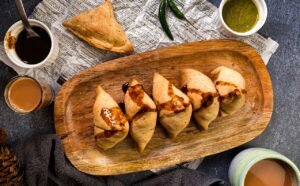
Ancient Middle Eastern Origins: The Sanbosag
Long before the samosa arrived on the Indian subcontinent, its ancestor was born in the Middle East. Historical records indicate that the precursor to the modern samosa was a pastry known as the sanbosag, sanbusak, or sanbusaq.
-
Nomadic Roots: The pastry originated with nomadic tribes in Central Asia and the Middle East, who needed portable, protein-rich foods that could withstand long journeys across harsh desert terrain.
-
Early Recipes: 9th- and 10th-century Arabic recipe books (Kitab al-Tabikh) feature instructions for small, half-moon pastries filled with minced meats, nuts, dried fruits, and warm spices like cinnamon and coriander, fried in hot oil.
Migration Along Trade Routes to South Asia
The pastry traveled eastward alongside traders, Sufi mystics, and soldiers during the expansion of Islamic empires into South Asia. By the Delhi Sultanate period (13th to 16th centuries), the samosa had found a welcoming home in South Asian court kitchens.
The 14th-century traveler Ibn Battuta described attending a banquet hosted by Sultan Muhammad bin Tughlaq, where a delicate, meat-filled pastry called samushak or sanbussak was served to guests.
The Great Vegetarian Transformation
While the original Middle Eastern version was almost exclusively filled with minced meat, nuts, and dried fruit, its journey through South Asia brought about its most famous metamorphosis: the vegetarian potato filling.
| Region / Culture | Filling Ingredients | Dough & Frying Style | Accompanying Dips & Chutneys |
| Northern India & Pakistan | Spiced mashed potatoes, green peas, ginger, green chilies, cumin, and coriander seeds. | Stiff wheat-flour dough rolled thin, folded into a crisp cone, and deep-fried until golden. | Tamarind chutney (imli) and fresh mint-cilantro chutney (pudina). |
| Middle East (Sanbusak) | Minced lamb or beef, onions, pine nuts, and warm spices (allspice, cinnamon). | Thinner pastry dough, sometimes baked or fried in semi-circle or triangle shapes. | Often served plain or dipped in yogurt-garlic sauces. |
| Central Asia & Horn of Africa (Sambusa) | Spiced ground beef, lentils, onions, and green chilies. | Crispy, wrapper-style dough folded tightly into small triangles and fried. | Hot pepper sauce (zhug or local chili pastes). |
| Southeast Asia (Karipap / Curry Puff) | Potatoes, chicken, and curry powder encased in a laminated spiral pastry. | Shortcrust or laminated pastry dough, crimped along the edges and deep-fried. | Served standalone as a popular breakfast or tea-time snack. |
Global Diaspora and Modern Variations
Today, the samosa’s journey continues across the globe, carried by South Asian and Middle Eastern diaspora communities to every corner of the planet:
-
East Africa: In countries like Kenya, Tanzania, and Uganda, the sambusa is a staple at family celebrations, Ramadan feasts, and street markets, typically filled with spiced ground beef or lentils.
-
Southeast Asia: In Malaysia, Singapore, and Indonesia, the local variant evolved into the karipap (curry puff), featuring flaky laminated pastry dough infused with British pie-making influences.
-
The Western World: From London curry houses to New York food trucks, the samosa is celebrated both as a comfort food snack and as a versatile canvas for contemporary culinary fusion—featuring fillings ranging from cheese and corn to duck confit and chocolate.
A Testimony to Culinary Exchange
The global samosa demonstrates that culinary traditions are never static. Born in the nomadic tents and royal courts of the Middle East, transformed in the kitchens of South Asia, and carried across oceans by modern diaspora communities, the humble samosa remains a delicious symbol of our shared human history of migration and flavor.