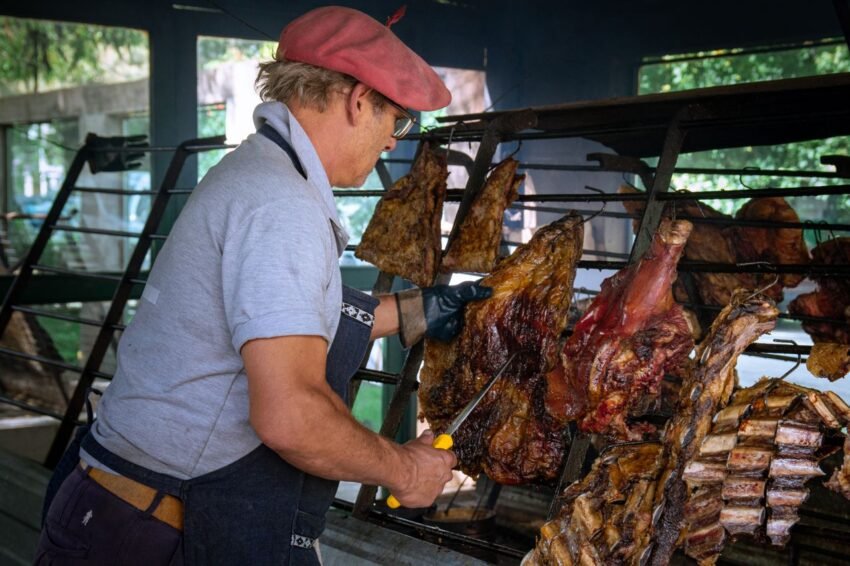
In Argentina, an Asado is far more than a outdoor barbecue or a meal centered on grilled meat. It is a sacred weekend ritual, a foundational piece of national identity, and a social engine that binds families, friends, and neighbors together.
To understand the asado is to understand the heart of Argentine culture—a tradition where time slows down, conversation flows freely, and the grill master (asador) commands total respect.
The Gaucho Origins: From the Pampas to the City
The roots of the asado trace back to the 18th and 19th centuries in the vast, fertile grasslands of the Argentine Pampas. Nomadic cowboys, known as gauchos, roamed the plains herding millions of wild cattle introduced by Spanish colonizers.
Lacking modern kitchens or complex utensils, gauchos developed a straightforward technique for cooking fresh beef: skewer large cuts on metal or wooden crosses (asado al asador) and drive them into the ground around an open campfire built from local hardwood (quebracho). This slow-roasting method over glowing embers tenderized tough cuts and infused the meat with a distinct smoky aroma.
As Argentina urbanized in the late 19th and early 20th centuries, migrating families brought this rural tradition into city courtyards, rooftops, and parks. Today, almost every home in Argentina features a custom-built brick grill grill pit called a parrilla.
Anatomy of an Authentic Asado: The Sequential Courses
Unlike Western barbecues where all items are served simultaneously on a single plate, an asado is a multi-hour culinary procession served in distinct, carefully timed stages:
| Stage / Course | Traditional Items | Description & Cultural Role |
| Preamble (Aperitivo) | Wine, Malbec, Vermouth | Guests gather around the asador, sipping red wine or vermouth while enjoying light snacks like olives and cheese. |
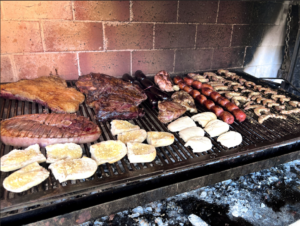
| First Wave (Achuras) | Chorizo, Morcilla, Mollejas | Pork sausage (choripan on crusty bread), blood sausage, and grilled sweetbreads served fresh off the grill. |
| Second Wave (Cortes Finos) | Provoleta, Matambre | Grilled seasoned provolone cheese sprinkled with oregano, and thin flank steak roll-ups. |
| The Main Event | Tira de Asado, Vacio, Ojo de Bife | Cross-cut short ribs, flank steak, and ribeye cooked low and slow with nothing more than coarse sea salt. |
The Role of the Asador and the Unwritten Rules
The host who takes charge of the fire—the asador—bears immense responsibility. Managing an asado requires patience and technical precision:
-
Fire Control (Sin Llama): Meat is never cooked over direct flames. The asador builds a separate fire on the side, dragging glowing wood coals under the grill grate to maintain a gentle, even heat.
-
Minimal Distraction: The beef is seasoned simply with coarse salt (sal parrillera). Heavy marinades or sweet commercial BBQ sauces are forbidden; the only acceptable accompaniment is a light Chimichurri (parsley, garlic, oregano, oil, and vinegar) or Salsa Criolla.
-
Unanimous Respect: Guests never interfere with the fire or suggest flipping the meat. At the conclusion of the meal, the host is traditionally honored with a loud, unanimous round of applause: “Un aplauso para el asador!”
The Social Glue of Argentina
An asado rarely lasts less than three or four hours. The extended meal allows for prolonged table talk—known as la sobremesa—where politics, football, family stories, and philosophy are debated over lingering glasses of Malbec wine.
By gathering around the fire, Argentines reaffirm their shared heritage, community bonds, and love for simple, unpretentious hospitality.