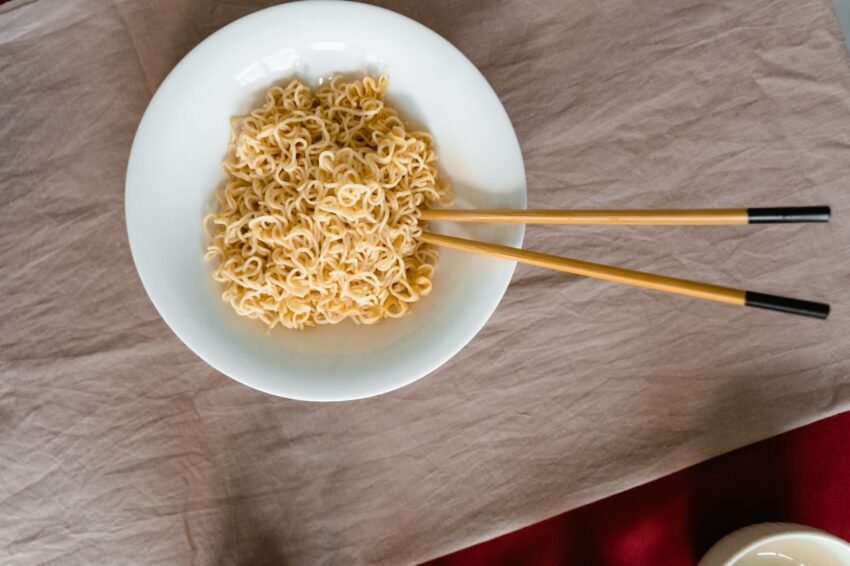
At first glance, a bowl of Italian fettuccine al pomodoro and a steaming bowl of Japanese tonkotsu ramen appear worlds apart. One relies on durum wheat, olive oil, and tomato sauce, served dry on a plate; the other features springy wheat strands submerged in rich pork bone broth, topped with chashu and bamboo shoots.
Despite these distinct culinary identities, both dishes share a foundational lineage. Their connection spans thousands of miles and centuries of cultural exchange across the Silk Road. Examining how pasta and ramen developed reveals how basic agricultural technology—milling wheat and working dough—traveled across continents to yield two of the world’s most popular comfort foods.
The Myth vs. The History: Where Did Noodles Originate?
A popular culinary myth suggests Marco Polo introduced noodles to Italy upon returning from China in 1295. However, historical and archaeological records show a far more nuanced timeline:
-
Ancient Chinese Archaeology: In 2002, archaeologists at the Lajia site in northwestern China discovered a 4,000-year-old bowl of preserved millet noodles, proving that noodle-making was well established in East Asia during the Neolithic era.
-
Greco-Roman Antecedents: The ancient Greeks made laganon, and the Romans consumed lagana—sheets of baked or boiled dough made from flour and water. While these were closer to flat pastry sheets or early lasagna sheets than extruded long strands, they establish early Mediterranean dough cultivation.
-
Arab Trade Innovations: By the 5th century, Arab merchants developed itriyya—dried, portable dough strands designed to resist spoilage on long desert journeys. Arab trade networks across North Africa and Sicily in the 9th century played a major role in introducing dried pasta traditions to Southern Europe.
Comparative Analysis: Pasta vs. Ramen
While both traditions rely on wheat flour and water, key technical differences in flour composition, dough chemistry, and culinary application set them apart:
| Attribute | Italian Pasta (Pasta Secca / Fresca) | Japanese Ramen (Ramen) |
| Primary Grain | Durum Wheat (Triticum durum), high in gluten and protein, giving a firm texture. | Bread Flour / Soft Wheat, combined with alkaline additives for springiness. |
| Alkaline Agent | None. Relies on egg yolks or water to bind gluten networks. | Kansui (potassium and sodium carbonate water), which gives noodles a yellow hue and firm chew. |
| Cooking & Serving | Boiled in salted water, drained, and tossed directly with an emulsified sauce. | Boiled briefly and served submerged in rich, seasoned broth (Shoyu, Miso, Tonkotsu, Shio). |
| Ideal Texture | Al dente (“to the tooth”)—firm to the bite with a slight resistance at the center. | Katakana / Springy—elastic, chewy, and resistant to softening in hot broth. |

Parallel Evolution Across the Silk Road
The journey of wheat noodles highlights how trade routes acted as culinary conduits. As rotary millstone technology migrated across Asia, Persia, and the Mediterranean:
-
China to Japan: Chinese lamian (hand-pulled noodles) traveled across the East China Sea, morphing into Japanese ramen through local adjustments in broth preparation, tare seasoning, and noodle texture.
-
Central Asia to the Mediterranean: Central Asian nomadic groups carried stuffed dough pockets (manti), which influenced regional variations from Russian pelmeni and Polish pierogi to Italian ravioli and tortellini.
-
Local Adaptation: In Italy, abundant sunshine and dry coastal winds allowed Sicily and Campania to become global capitals for mass-dried pasta, whereas Japanese cooks focused on fresh alkaline dough suited for hot soups.
Two Expressions of an Ancestral Staple
Pasta and ramen are not direct copies of one another, but rather biological and cultural cousins. Both represent an ancient human solution to making grain palatable, transportable, and versatile. Whether rolled into tagliatelle ribbons in Emilia-Romagna or pulled into springy strands in Yokohama, both dishes carry the shared history of human trade, farming, and culinary creativity.