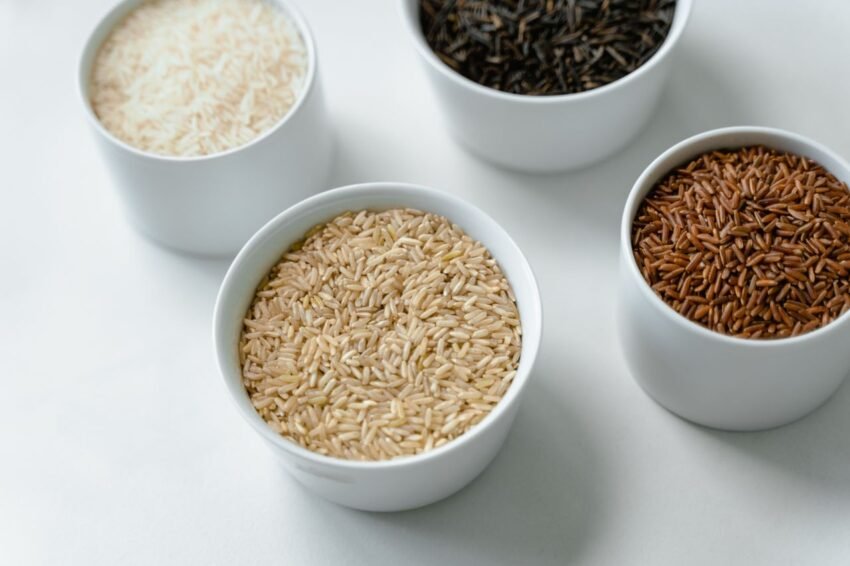
For more than 3.5 billion people—more than half of the human population—rice is not merely a side dish or a casual side option; it is the absolute foundation of daily life. In many Asian languages, the word for “rice” is synonymous with “food” or “meal” itself. From the terraced paddies of Southeast Asia to the river basins of West Africa and the fields of South America, rice (Oryza sativa and Oryza glaberrima) provides over 20% of the world’s human dietary energy, surpassing wheat and maize in direct human consumption.
The story of rice is the story of civilization itself—a journey of agricultural engineering, cultural reverence, and economic power that spans over 10,000 years.
The Agricultural Cradle: Domestication and Spread
Archaeological evidence places the earliest domestication of Asian rice (Oryza sativa) along China’s Yangtze River valley around 8,000 to 10,000 BCE. Concurrently or shortly after, indigenous communities in India domesticated the indica subspecies in the Ganges river plain, while a separate species (Oryza glaberrima) was cultivated independently in the Niger River delta of West Africa around 1,500 BCE.
As communities shifted from nomadic gathering to settled agriculture, rice cultivation required unprecedented social organization:
-
Water Management: Paddy farming demanded sophisticated irrigation networks, canals, and terracing to control water levels during germination and growth.
-
Communal Labor: Planting, weeding, and harvesting flooded paddies necessitated collaborative labor pools, laying the foundations for tightly knit agrarian villages and complex societal structures.
A Tale of Grains: Starch Chemistry and Varieties
The vast diversity of rice varieties across the globe stems from differences in grain length, aroma, and starch composition—specifically the ratio of amylose to amylopectin:
-
High-Amylose (Long-Grain): Varieties like Basmati and Jasmine contain 20–25% amylose. When cooked, the grains stay separate, fluffy, and firm, making them ideal for biryanis, pilafs, and curries.
-
High-Amylopectin (Short-Grain & Sticky): Varieties like Japonica (sushi rice) and Glutinous rice have low amylose levels, causing the starch to break down into a sticky, cohesive texture perfect for eating with chopsticks or shaping into rice cakes.
| Rice Type | Origin / Primary Region | Key Culinary Applications | Distinctive Traits |
| Basmati | India & Pakistan | Biryanis, Pulaos, Persian Chelo | Long, slender grain that elongates significantly when cooked; rich floral aroma (2-acetyl-1-pyrroline). |
| Jasmine | Thailand | Stir-fries, Thai curries, Hainanese Chicken Rice | Subtle floral aroma, slightly sticky texture, tender mouthfeel. |
| Arborio / Carnaroli | Northern Italy | Risottos, Arancini | High surface starch releases during slow cooking to create a creamy sauce while retaining an al dente core. |
| Glutinous (Sticky Rice) | Southeast & East Asia | Mango sticky rice, Zongzi, Mochi | Virtually zero amylose; becomes highly sticky and translucent when steamed. |
| Bomba | Spain | Paella | Medium grain that absorbs two to three times its volume in broth without breaking down into a mush. |
Cultural Symbolism and Modern Challenges
Beyond nutrition, rice is deeply woven into global mythology, religious rituals, and social customs. In India, rice is associated with prosperity and the goddess Lakshmi, thrown over newlyweds to symbolize fertility. In Japan, rice was historically used as currency and tax payment, while in West Africa, rice dishes like Jollof serve as iconic symbols of regional pride and rivalry.
Today, however, global rice production faces significant challenges:
-
Climate Vulnerability: Rice paddies require immense water resources and are highly susceptible to droughts, floods, and saltwater intrusion caused by rising sea levels in coastal river deltas.
-
Methane Emissions: Flooded rice paddies create anaerobic conditions where bacteria decompose organic matter, generating roughly 8–10% of global agricultural methane emissions.
-
Innovative Solutions: Sustainable techniques like the System of Rice Intensification (SRI) and alternate wetting and drying (AWD) methods are reducing water use and methane emissions while maintaining high yields for smallholder farmers.
The Grain of Humanity
From ancient river terraces to modern urban dining tables, rice remains an indispensable pillar of human sustenance. Its ability to adapt to diverse climates, nourish vast populations, and serve as a canvas for global flavor traditions cements its status not just as a grain, but as the very essence of life for half our world.