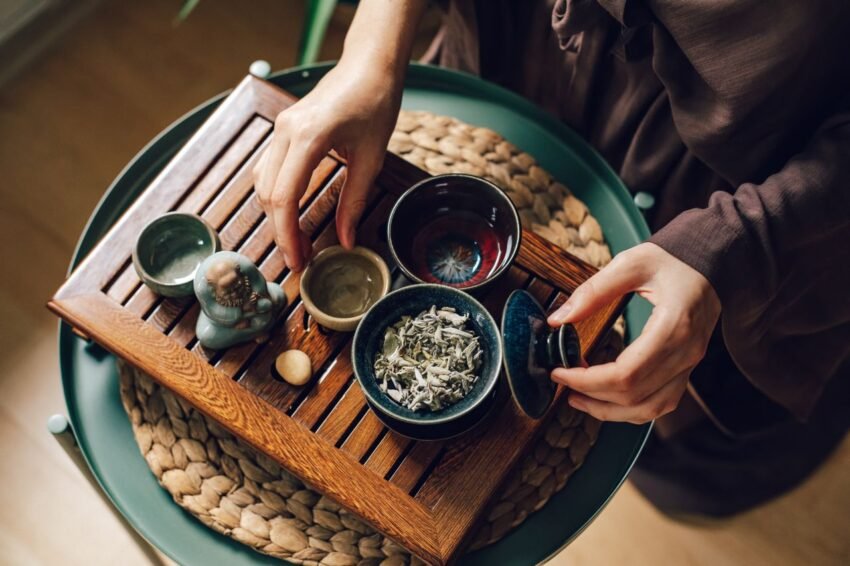
The Japanese tea ceremony, known as Chanoyu (literally “hot water for tea”) or Chado (“The Way of Tea”), is far more than a refined method for preparing a beverage. It is a spiritual discipline, a living art form, and a physical manifestation of Zen Buddhism.
Every deliberate movement—from the wipe of a silk cloth to the whisking of powdered green tea (matcha)—is designed to strip away the noise of the world, anchoring both host and guest firmly in the present moment.
The Philosophical Foundations: Zen in Action
The connection between tea and Zen Buddhism dates back to 9th-century monks who consumed green tea during long hours of meditation to stay alert. Over centuries, these monkish practices evolved into a structured social ritual, largely perfected in the 16th century by the great tea master Sen no Rikyu.
Rikyu defined the spirit of the tea ceremony through four fundamental principles:
-
Wa (Harmony – 和): The harmony between the host, the guests, the utensils, and the natural environment.
-
Kei (Respect – 敬): The mutual respect that arises from recognizing the dignity of every person and object involved in the gathering.
-
Sei (Purity – 清): The act of cleansing both physical surroundings and the inner mind before stepping into the tea room.
-
Jaku (Tranquility – 寂): The serene state of mind attained when harmony, respect, and purity are fully realized.
Central to this philosophy is the concept of Wabi-Sabi—finding profound beauty in imperfection, asymmetry, and the natural aging of materials. Unpretentious, handmade ceramic tea bowls (chawan) with rough glazes and subtle cracks are far more prized in a tea room than flawless, mass-produced china.
Anatomy of a Gathering: The Ritual Journey
A traditional formal gathering (Chaji) can last up to four hours and follows a meticulously planned sequence designed to cultivate mindfulness:
| Stage | Primary Actions | Spiritual & Practical Purpose |
| Purification (Roji) | Guests walk through a garden path and wash hands/mouth at a stone basin. | Leaves worldly cares behind and purifies the senses before entering. |
| The Crawl-In (Nijiriguchi) | Guests enter the tea room through a tiny sliding door only 3 feet high. | Forces all guests to bow regardless of social status; samurai had to leave swords outside. |
| Sweet Pairing (Wagashi) | Guests consume a seasonal, delicate sweet before tasting the tea. | Balances the intense, astringent bitterness of the ceremonial matcha. |
| The Preparation (Temae) | The host cleans utensils using rhythmic, silent gestures and whisking matcha. | Manifests total presence and devotion to the comfort of the guests. |
Ichigo Ichie: One Time, One Meeting
Perhaps the most poignant expression associated with the Japanese tea ceremony is Ichigo Ichie (一期一会), which translates to “One time, one meeting.”
It serves as a constant reminder that even if the same host and guests gather in the exact same room using the same utensils next week, the present moment can never be repeated. The weather outside will differ, the seasonal flower in the alcove will be new, and the participants will be at different stages of their lives.
By treating the preparation of a single cup of green tea as a unrepeatable lifetime event, the Japanese tea ceremony transforms a routine beverage break into a profound lesson on impermanence, mindfulness, and the sacred beauty of everyday existence.