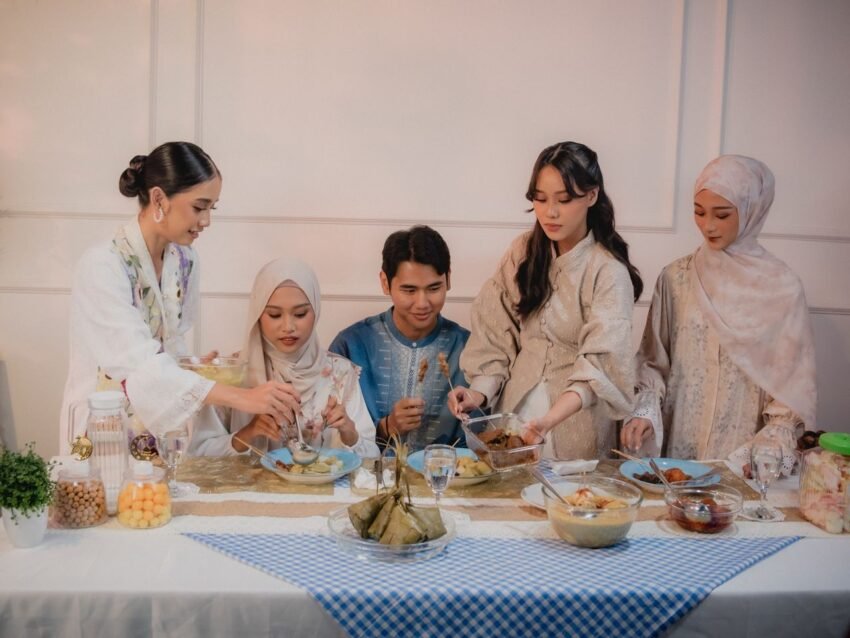
Across religious traditions, spiritual growth is often expressed through a cycle of restraint and celebration. Few rituals demonstrate this dynamic as vividly as Ramadan in Islam and Lent in Christianity. While rooted in distinct theological origins, both observances share a profound culinary rhythm: long periods of fasting and mindful abstinence, punctuated by joyful communal feasting.
By temporarily altering the daily relationship with food, these holy seasons transform the dining table into a space for self-discipline, empathy, gratitude, and community bonding.
Ramadan: The Daily Cycle of Solitude and Celebration

Observed during the ninth month of the Islamic lunar calendar, Ramadan commemorates the initial revelation of the Quran to the Prophet Muhammad. For an entire month, healthy adult Muslims abstain from all food, drink (including water), and tobacco from dawn until sunset.
The culinary rhythm of Ramadan operates on a daily 24-hour cycle:
-
Suhoor (The Pre-Dawn Meal): Eaten before the first light of day, this quiet, functional meal focuses on slow-digesting complex carbohydrates, high-fiber grains, healthy fats, and hydrating liquids to sustain the body throughout the day.
-
The Daytime Fast: Abstaining from food and water shifts focus away from physical cravings toward prayer, spiritual reflection, charitable giving (Zakat), and self-restraint.
-
Iftar (Breaking the Fast at Sunset): Following the call to evening prayer (Maghrib), the fast is traditionally broken—emulating the Prophet Muhammad—with a sip of water and an odd number of sweet dates. What follows is a vibrant communal feast where families, neighbors, and strangers gather to share rich soups, stews, pastries, and regional delicacies.
Lent: The Multi-Week Journey Toward Renewal
In Christianity, Lent is a 40-day season of preparation leading up to Easter, recalling the 40 days Jesus spent fasting in the desert. Unlike the absolute daily fast of Ramadan, Lenten discipline historically centers on abstinence—giving up specific rich foods, meat, dairy, or personal luxuries.
Historically, Western and Eastern Christian traditions developed distinct dietary patterns:
-
Western Traditions (Catholicism & Protestantism): Modern Lenten practice often involves giving up a specific luxury (like sugar, alcohol, or meat on Fridays). Shrove Tuesday (Mardy Gras/Pancake Tuesday) evolved as a way to clear the pantry of rich fats, eggs, and dairy before the fast began.
-
Eastern Traditions (Eastern Orthodoxy): Great Lent involves a rigorous plant-based diet. Believers abstain from meat, dairy, eggs, fish, wine, and olive oil for the entire 40-day period, eating simple legumes, grains, and vegetables.
Comparing Culinary Patterns: Ramadan vs. Lent
| Aspect | Ramadan (Islam) | Lent (Christianity) |
| Primary Structure | Complete daily fast (no food/water) from dawn to sunset for 29–30 days. | Partial fast or dietary abstinence (giving up meat/luxuries) over 40 days. |
| Daily Rhythm | High contrast: Strict fasting by day, feasting and socializing by night. | Steady, subdued moderation throughout the season, building toward Easter. |
| Signature Break-Fast Foods | Dates, Harira soup (North Africa), Jalebi, samosas, sweet fruit rooh afza drinks. | Hot cross buns, pretzels (symbolizing arms folded in prayer), fish on Fridays. |
| Culinary Culmination | Eid al-Fitr: A 3-day “Festival of Sweets” featuring baklava, ma’amoul, and biryani. | Easter Sunday: Festive roast lamb, rich egg breads (like Greek tsoureki), and chocolate. |
The Shared Spiritual Purpose
While the rules and menus differ, Ramadan and Lent fulfill the same fundamental human need: breaking the routine of continuous consumption. By voluntarily enduring hunger, believers cultivate empathy for the impoverished, strip away material distractions, and regain deep gratitude for the food on their plates when the fast is finally broken.