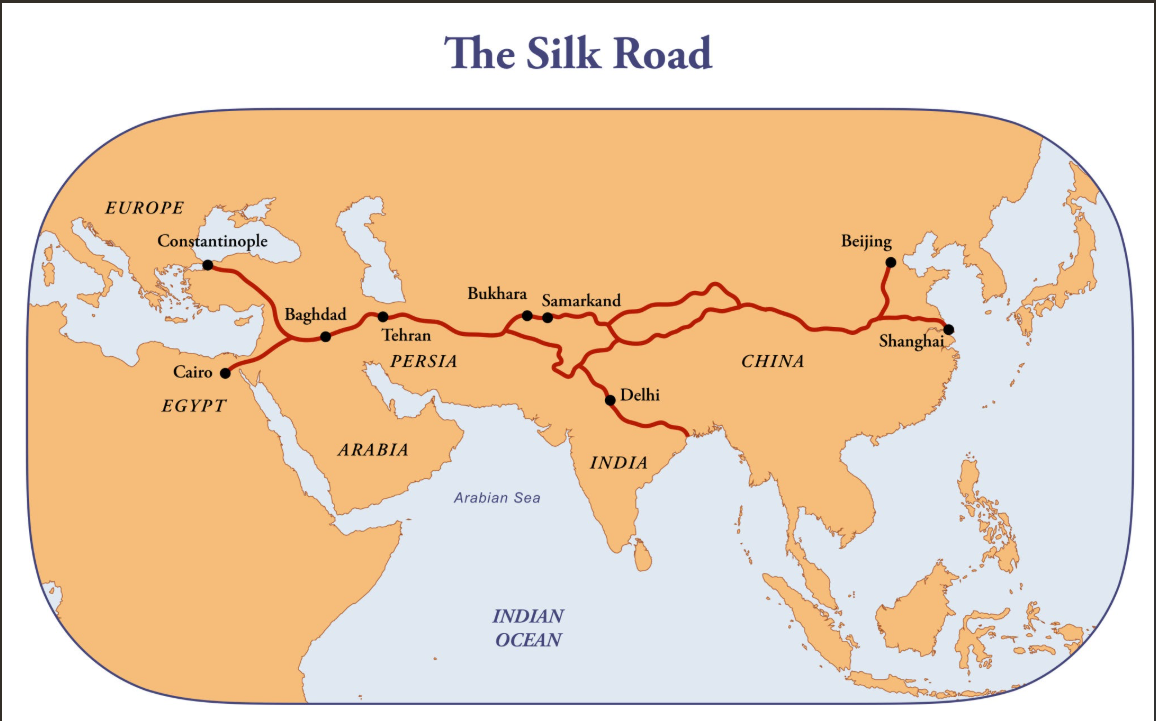
Long before modern globalization homogenised supermarket shelves, a network of mountain passes, desert tracks, and sea lanes connected the ancient world. Spanning thousands of miles from the imperial capitals of China to the ports of the Mediterranean, the Silk Road is often remembered for silk, porcelain, and precious metals. Yet, its most lasting legacy isn’t stored in museums—it is served on dinner tables every day.
Between the 2nd century BCE and the 14th century CE, caravans carried more than just dry goods. They transported seeds, livestock, fermentation techniques, and culinary ideas. The result was a fusion of flavors that redefined global eating habits and built the foundation of modern cuisine.
The Great Wheat and Noodle Exchange
One of the most profound exchanges along the Silk Road was the movement of staple grains. Wheat, originally domesticated in the Fertile Crescent of West Asia, traveled eastward into China during the Han Dynasty. Chinese cooks quickly adapted this new grain, shifting from whole-grain steaming to fine milling. This innovation gave rise to two staple foods: noodles and stuffed dough parcels.
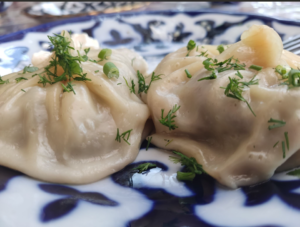
As traders, nomads, and pilgrims traveled back westward, they carried preserved dough and rolling techniques with them. This cross-pollination created a global family of filled dumplings that still share linguistic and structural roots today:
-
China: Jiaozi and steamed Baozi
-
Central Asia: Steamed meat Manti
-
Georgia: Soupy Khinkali
-
Poland & Eastern Europe: Savory Pierogi
-
Italy: Stuffed Ravioli and Tortellini
Spices, Aromatics, and the Redefinition of Taste
Before the Silk Road, regional cooking was strictly bounded by local geography. The influx of foreign spices transformed culinary traditions, turning local sustenance into complex culinary art.
-
Westward Bound: China exported ginger, rhubarb, star anise, and tea to Central and West Asia.
-
Eastward Bound: Central Asian caravans brought garlic, walnuts, sesame seeds, coriander, and pomegranates into China.
-
The Southern Maritime Route: Indian black pepper, cardamom, and cinnamon moved through maritime routes, reaching Roman elites who paid exorbitant prices to season their wine and meats.
This cross-continental movement didn’t just introduce individual ingredients; it introduced the concept of pairing sweet and savory elements. The Persian practice of combining slow-cooked meats with dried fruits and nuts traveled along trade paths, directly influencing North African tagines, medieval European banquets, and South Asian biryanis.
Agricultural Transformations Across Continents
The Silk Road served as a conduit for living agricultural products, reshaping landscapes and farming economies across continents.
| Origin Region | Introduced Crop | Impacted Culinary Culture |
| Southeast Asia / China | Citrus Fruits (Lemons, Oranges) | Mediterranean, Persian, and European cuisines |
| Persia / Central Asia | Alfalfa, Spinach, Carrots | East Asian agriculture and everyday cooking |
| Fertile Crescent | Wine Grapes (Vitis vinifera) | Tang Dynasty Chinese viticulture and court dining |
| South Asia | Sugarcane | Middle Eastern confectionery and global syrup trade |
The Modern Legacy in Everyday Meals
Modern “national cuisines” are rarely isolated inventions. The dishes considered authentic or native to a specific country are frequently the result of centuries of trade, adaptation, and cultural exchange. Every time you enjoy a bowl of hand-pulled laghman noodles in Uzbekistan, a rich saffron-infused polow in Iran, or a warm cup of spiced chai in India, you are experiencing the edible history of the Silk Road.
Hi, this is a comment.
To get started with moderating, editing, and deleting comments, please visit the Comments screen in the dashboard.
Commenter avatars come from Gravatar.