Lunar New Year, also known as the Spring Festival (Chun节), is the most significant holiday in East and Southeast Asian cultures. Spanning 15 days, it marks the end of winter and the beginning of spring, heralding new beginnings, family reunions, and hopes for prosperity.
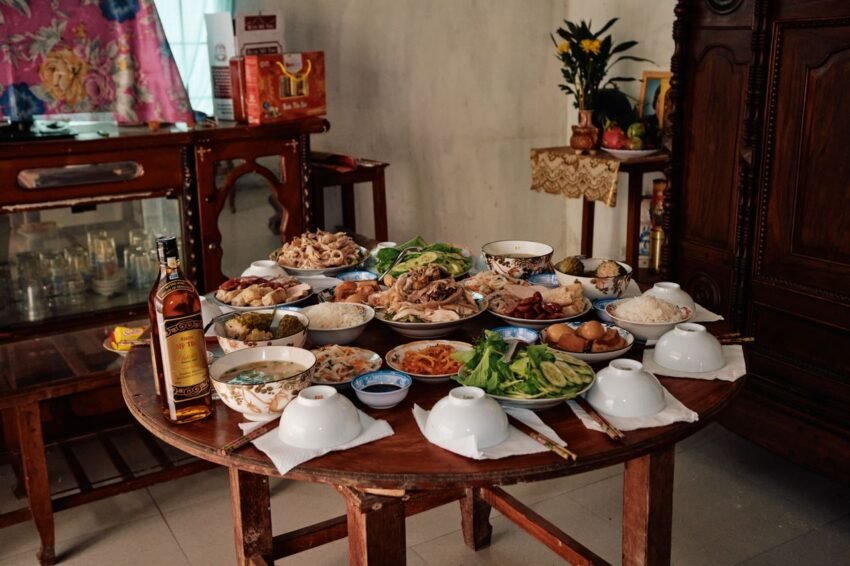
At the absolute center of this holiday sits the Reunion Dinner (Nian Ye Fan) on New Year’s Eve. For those celebrating, the dishes served are far more than sustenance; they are symbolic wishes made tangible through culinary puns, visual metaphors, and ancient traditions designed to attract good fortune, wealth, and longevity for the coming year.
The Power of Linguistic Puns in Festivity
Much of the symbolism in Lunar New Year food comes from linguistic homophones—words in Chinese dialects (such as Mandarin and Cantonese) that sound identical or nearly identical to words for luck, wealth, or abundance.
-
Fish (Yú – 鱼): The word for fish sounds exactly like the word for “surplus” or “abundance” (Yú – 馀). A classic holiday phrase is Nian Nian You Yu, meaning “May you have abundance year after year.” Crucially, the fish is cooked and served whole with head and tail intact, symbolizing a good start and finish to the year.
-
Tangerines and Oranges (Jú – 桔 and Chéng – 橙): The word for tangerine sounds like “luck” (Jí – 吉), while the word for orange sounds like “success” or “wealth” (Chéng – 成). Their round shapes and bright golden colors further reinforce associations with gold coins and prosperity.
-
Sticky Rice Cake (Nian Gao – 年糕): The name sounds like “higher year” (Nian Gao – 年高), symbolizing growth, promotions at work, higher grades for children, and general life improvement in the coming year.
Anatomy of a Lucky Menu: Symbolism on the Plate
Every item selected for a Lunar New Year banquet corresponds to a specific desire for the upcoming year:
| Dish | Physical Shape / Linguistic Pun | Intended Blessing |
| Dumplings (Jiaozi) | Shaped like silver and gold ingots (Yuanbao) of ancient currency. | Attracting financial wealth and prosperity. |
| Spring Rolls (Chun Juan) | Golden-fried cylinders resembling bars of solid gold. | Wealth and fresh spring beginnings. |
| Longevity Noodles (Changshou Mian) | Extra-long, uncut noodles stretched continuously. | Long life and good health (cutting noodles is bad luck). |
| Glutinous Rice Balls (Tangyuan) | Smooth, round balls served in warm sweet syrup. | Family harmony, togetherness, and completeness. |
Regional Stars: Yusheng and Poon Choi
As Lunar New Year traditions traveled across East and Southeast Asia, distinct regional celebratory dishes emerged:
-
Yusheng / Lo Hei (Singapore & Malaysia): A colorful raw fish salad where diners stand together using chopsticks to toss the shredded vegetables, fish, and sauces high into the air while shouting auspicious wishes. The higher you toss the ingredients, the higher your prosperity and luck will grow.
-
Poon Choi (Hong Kong & Guangdong): A grand “basin dish” layered high with expensive, luxury ingredients such as abalone, sea cucumber, scallops, roast duck, and dried oysters. Eaten communally from a single large wooden or clay vessel, it signifies collective wealth and village unity.
The Table as a Map for the Future
Lunar New Year feasting demonstrates how food can act as a vessel for collective optimism. By honoring centuries-old linguistic traditions, family recipes, and symbolic rituals, generations come together around a shared table to eat away the misfortunes of the past year and welcome a bright, prosperous future.