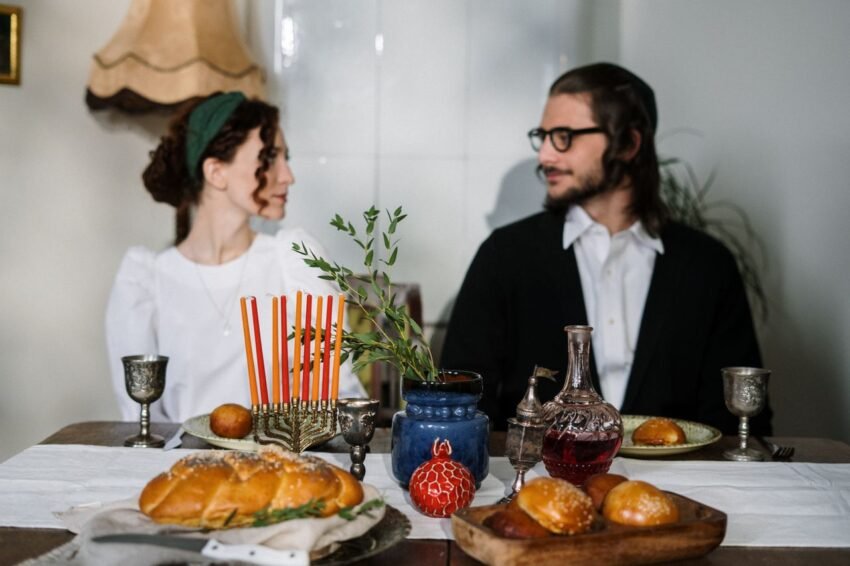
Every Friday evening as the sun dips below the horizon, millions of Jewish families across the globe step out of the frantic pace of the modern week and into a sanctuary carved out of time. Shabbat—the Jewish Sabbath—is a weekly 25-hour holiday of rest, reflection, and spiritual renewal that runs from Friday sunset to Saturday nightfall.
At the heart of this ancient observance sits the Shabbat dinner: a multi-course ritual feast that has sustained Jewish culture, continuity, and identity across thousands of years and centuries of global dispersion.
The Architecture of the Table: Essential Rituals
The Shabbat dinner is far more than a casual family meal; it is a carefully choreographed spiritual performance. The physical elements on the dining table mirror historical symbolism dating back to the Biblical era:
-
Lighting the Candles (Hadlakat Nerot): Traditionally performed by the matriarch of the home just before sunset, lighting at least two candles introduces light, warmth, and peace (Shalom Bayit) into the household, formally welcoming the Sabbath.
-
The Blessing Over the Wine (Kiddush): Before eating, the head of the household fills a goblet to the brim with kosher wine or grape juice. The recitation of the Kiddush sanctifies the day, acknowledging both the creation of the universe and the Exodus from Egypt.
-
The Braided Loaves (Challah): Two braided loaves of challah sit covered by an embroidered cloth. The two loaves commemorate the double portion of manna that fell from the sky in the desert for the Israelites on Fridays so they would not have to gather food on the Sabbath.
Culinary Diversity Across the Jewish Diaspora
While the core blessings and structure remain identical across the world, the actual menu served at Shabbat dinner reflects the geographic history of the two primary Jewish cultural branches:
| Culinary Category | Ashkenazi Traditions (Central & Eastern Europe) | Sephardic & Mizrahi Traditions (Spain, North Africa, Middle East) |
| Soup / Starter | Gefilte fish with horseradish, golden chicken soup with matzo balls. | Fresh herbs, spicy fish stew (Chraime), array of cooked salatim (dips/salads). |
| Main Course | Roast chicken, brisket, potato kugel, tzimmes (sweet carrot stew). | Dafina or Tfina (overnight beef, chickpea, and whole egg stew), slow-cooked lamb. |
| Challah Style | Sweet, egg-rich braided bread dusted with poppy or sesame seeds. | Fluffy savory breads flavored with cumin, anise, or nigella seeds. |
Preserving Culture Through Slow Cooking
Because traditional Jewish law prohibits lighting a fire or operating electrical appliances on the Sabbath itself, Jewish cooks developed ingenious culinary techniques to serve hot food on Saturday afternoon without breaking religious law.
In Eastern Europe, cooks created Cholent—a hearty stew of beef, barley, potatoes, and beans placed in a communal baker’s oven on Friday before sunset and left to simmer overnight for 12 to 14 hours. In North Africa and the Middle East, a similar dish called Dafina incorporated whole eggs in their shells, chickpeas, and spices.
These long-simmered dishes became signature tastes of home, linking generations through shared sensory memories.
The Sanctuary in Time
As the 20th-century philosopher Abraham Joshua Heschel famously wrote, Shabbat is a “palace in time”—a built-in pause button that forces individuals to stop producing, spending, and consuming.
By gathering weekly around a set table, singing traditional melodies (Zmirot), blessing children, and engaging in uninterrupted conversation without screens, Jewish families pass down values, history, and community resilience from one generation to the next—one Friday night at a time.