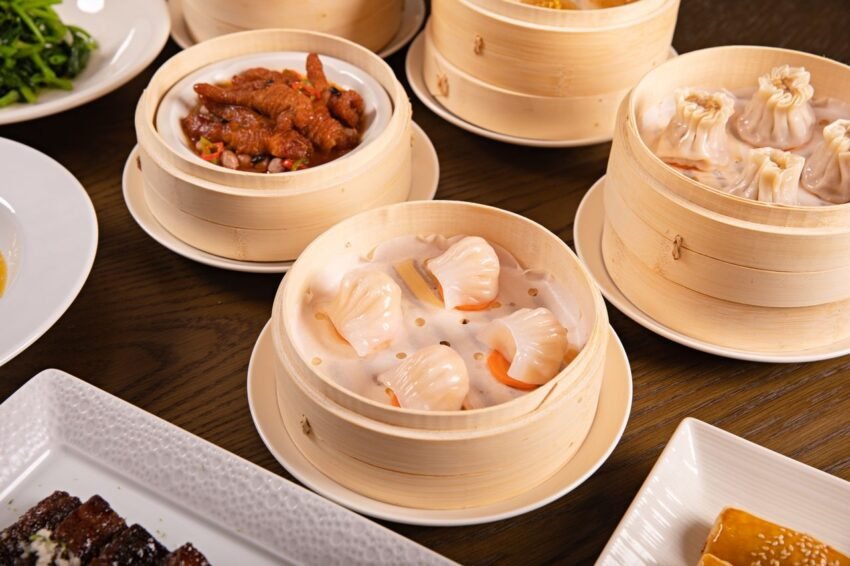
Few culinary traditions blend gastronomy, history, and community quite like Dim Sum and the Cantonese practice of Yum Cha (literally “drinking tea”). What began as simple roadside rest-stop snacks for ancient Silk Road merchants in Southern China has evolved into one of the world’s most vibrant social dining experiences.
Far more than an aesthetic parade of bamboo steamer baskets, Dim Sum is an essential weekend ritual designed to bring multi-generational families together over tea, gossip, and meticulously crafted bite-sized delicacies.
The Heart of the Ritual: Yum Cha
While global diners focus on the food, in Cantonese culture, the tea comes first. Ordering tea is the first action upon sitting down, and the pot remains the focal point of the table throughout the meal:
-
The Four Classic Teas: Diners choose from robust varieties like Jasmine (floral and fragrant), Pu-erh (earthy and fermented, prized for cutting through greasy foods), Tieguanyin (a smooth Oolong), or Chrysanthemum (cooling and herbal).
-
The Finger-Tapping Gesture: When someone pours tea for you, it is customary to tap your index and middle fingers twice on the table. Legend holds this gesture originated during the Qing Dynasty when an emperor traveling in disguise served tea to his companions; his servants tapped the table to mimic bowing without revealing the emperor’s identity.
-
The Lid Flip Signal: When the teapot runs out of hot water, diners simply flip the lid upside down or set it askew on the pot—a silent signal to servers to refill the pot with boiling water.
The Essential Four: The Kings of the Steamer
“Dim Sum” translates loosely to “touch the heart.” A chef’s mastery is judged by their ability to execute the classic repertoire, particularly the “Four Heavenly Kings” of Cantonese dim sum:
| Classic Dish | Cantonese Name | Culinary Characteristics & Craft |
| Crystal Shrimp Dumplings | Har Gow (蝦餃) | Translucent, pleated wheat-starch skin hiding plump shrimp. A master chef must fold at least 7 to 10 pleats per dumpling without the skin breaking. |
| Pork & Shrimp Open Dumplings | Siu Mai (燒賣) | Open-topped cup wrapped in thin egg dough, filled with seasoned ground pork, chopped shrimp, and topped with crab roe or goji berries. |
| Steamed Barbecue Pork Buns | Char Siu Bao (叉燒包) | Pillowy white steamed dough that splits open naturally at the top to reveal sweet, savory, barbecue-roasted pork filling. |
| Egg Tarts | Dan Tat (蛋撻) | Flaky, buttery puff pastry shell filled with smooth, baked egg custard—a mid-20th century fusion inspired by Portuguese pastel de nata and British tarts. |
The Dim Sum Table as a Social Engine
Dim Sum is inherently democratic and communal. Dishes arrive in sets of three or four pieces, encouraging sharing, discussion, and collective decision-making.
Whether navigating traditional rolling carts or marking paper order cards with pencils, the noise of clinking teacup lids, hissing steamers, and lively family chatter creates an atmosphere of warmth and connection. In an increasingly fast-paced world, the slow, multi-hour ritual of Yum Cha preserves Cantonese identity, honoring the timeless art of slowing down to break bread—and drink tea—with those who matter most.