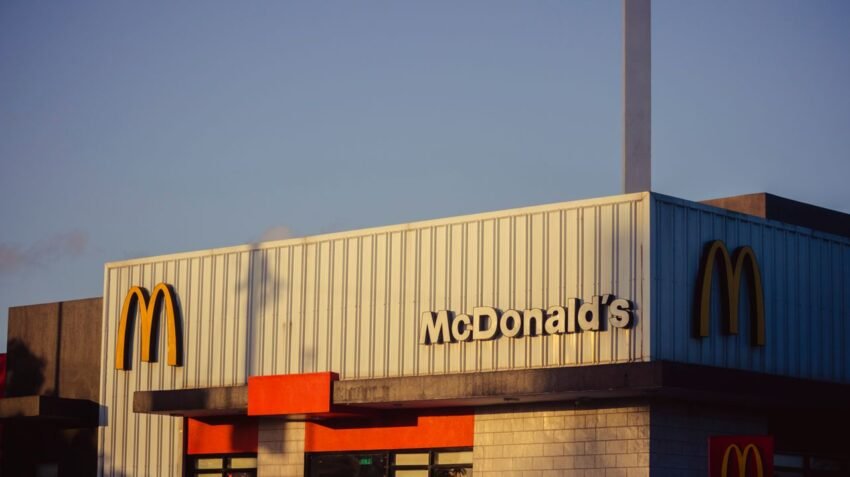
The golden arches of McDonald’s, the red roofs of Pizza Hut, and the white-bearded smile of Colonel Sanders can be found on busy street corners from Tokyo to Buenos Aires, Nairobi to London. The rapid expansion of multinational fast-food chains over the past half-century stands as one of the most visible symbols of economic globalization.

However, the global spread of fast food is far more complex than western culinary imperialism simply overriding native food traditions. It is a dynamic tension between cultural homogenization—the standardization of global eating habits—and local adaptation (often termed “glocalization”), wherein global brands must adapt their menus, aesthetics, and values to align with local palates and cultural norms.
The Force of Homogenization: The “McDonaldisation” of Society
Sociologist George Ritzer famously coined the term “McDonaldization” to describe how the principles of the fast-food restaurant—efficiency, calculability, predictability, and control—have come to dominate global society.
Homogenization manifests in several ways across the food landscape:
-
Standardization of Taste: Global fast-food chains rely on industrial supply chains and precise operational manuals to ensure that a French fry or fried chicken piece tastes nearly identical whether consumed in Chicago or Cairo.
-
Erosion of Local Foodways: The accessibility, affordability, and heavy marketing of fast food have shifted dietary habits worldwide, contributing to a decline in slow-cooked traditional meals and driving global increases in metabolic health conditions.
-
Architectural and Cultural Uniformity: The physical presence of drive-thrus, neon signages, and disposable packaging creates a visual homogeneity across diverse urban cityscapes.
The Counter-Force: Local Adaptation (“Glocalization”)
To survive and thrive in competitive international markets, multinational fast-food corporations quickly learned that a “one size fits all” strategy often fails. Adaptation is required to respect local religious dietary laws, regional spice tolerances, and cultural social practices.
| Region / Country | Brand & Adapted Menu Items | Cultural Driver & Strategy |
| India | McAloo Tikki Burger, Maharaja Mac (Chicken/Veg) | Total exclusion of beef and pork to respect Hindu and Muslim religious dietary laws, featuring vegetarian menus cooked in segregated kitchen stations. |
| Japan | Teriyaki Burger, Matcha McFlurry, Tsukimi Burger | Incorporating native Japanese flavor profiles, umami sauces, and seasonal celebrations (e.g., Autumn Moon-viewing festival items). |
| Middle East | McArabia (Flatbread wrap), Halal-certified meats | Adherence to strict Halal slaughter standards and adapting Western burgers into traditional flatbread shawarma formats. |
| Philippines | Chickenjoy with Rice, Jolly Spaghetti (Sweet sauce) | Adapting menus to match local preference for rice staples paired with savory fried chicken and sweetened tomato sauces. |
Social Spaces: Redefining the Fast-Food Experience
In Western nations, fast food is typically viewed as quick, low-cost convenience meal options consumed in a hurry or in a vehicle. However, in many developing economies and international markets, global fast-food outlets serve an entirely different social purpose:
-
Status and Modernity: In the late 20th century, dining at an American fast-food chain in cities like Beijing or Moscow was considered a prestigious middle-class status symbol and a window into global culture.
-
Community Gathering Hubs: In many Asian and Latin American cities, fast-food outlets function as spacious, air-conditioned community hubs where students study for hours, families hold birthday parties, and business meetings take place.
-
Safe, Standardized Environments: For international tourists and local families alike, global franchises often provide predictable cleanliness, familiar amenities, and standardized hygiene standards.
The Rise of Regional Fast-Food Champions
The globalization of fast food is no longer a one-way street. Domestic brands born in non-Western markets are adopting corporate standardization methods to build multinational empires of their own.
Brands like Jollibee (Philippines), Nando’s (South Africa), and Habib’s (Brazil) have expanded internationally, bringing regional flavor profiles to global audiences and proving that local adaptation can originate from any corner of the globe.
A Dynamic Hybrid Frontier
The story of global fast food is neither pure cultural homogenization nor total regional preservation. Instead, it represents a dynamic hybridity. While the structural frameworks of fast food remain standardized across borders, what ends up between the buns or inside the box is constantly negotiated, re-invented, and reshaped by the local cultures that consume it.