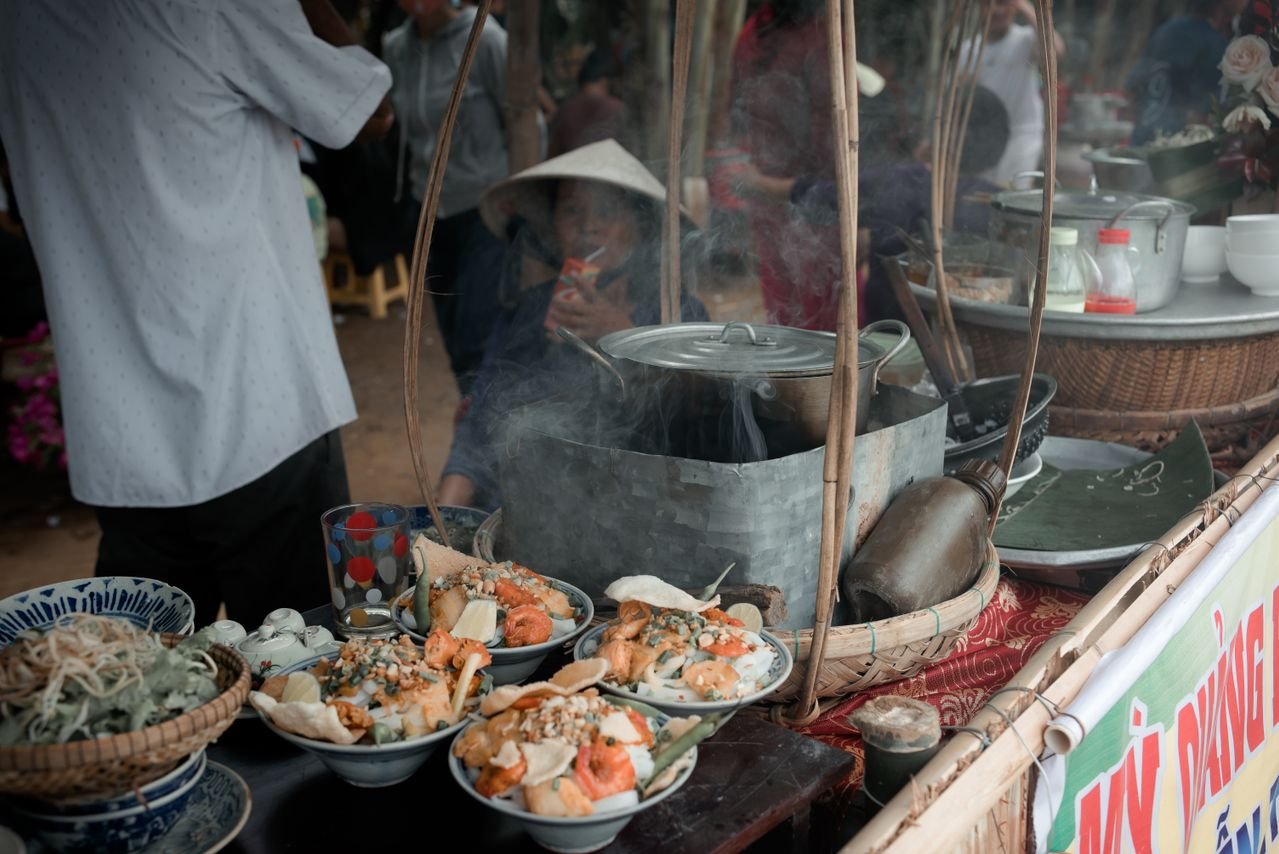
Today, street food is often celebrated as the ultimate expression of culinary authenticity—a vibrant world of night markets, taco trucks, and sizzling roadside stalls. Yet, buying ready-to-eat food in public wasn’t born out of modern food culture or foodie tourism. It began as an urban necessity for the working poor thousands of years ago.
From the bustling stone counters of ancient Rome to the neon-lit night markets of Southeast Asia, street food has always been the fuel that powers cities.
Ancient Rome: The Original Fast-Food Society
The modern habit of grabbing lunch on the go was standard daily life in the Roman Empire. Most lower-class urban Romans lived in crowded, multi-story apartment buildings called insulae. These wooden structures rarely had private kitchens or chimneys due to severe fire risks.
To eat, working-class Romans relied on thermopolia—street-facing snack shops with stone counters containing embedded terracotta jars (dolia).
-
The Menu: Customers could buy hot lentil stews, salted fish, coarse bread, fried cheese, nuts, and wine mixed with warm water.
-
Social Hub: Like modern corner diners, thermopolia served as essential daily meeting spots for laborers, slaves, and travelers. Recent excavations in Pompeii revealed remarkably well-preserved thermopolia with painted frescoes depicting the animals served on site.
Song Dynasty China and Edo Japan: The Asian Street Food Engine
While European street food slowed during the Middle Ages, Asia’s rapidly growing cities developed highly sophisticated street food ecosystems.
During China’s Song Dynasty, sprawling cities like Kaifeng became trading powerhouses. Night markets emerged to feed workers, merchants, and entertainers long after dark. Vendors sold pan-fried dumplings, steamed buns, grilled seafood, and sweet soups from portable stoves suspended on shoulder poles (bian dan).
In 19th-century Japan, Edo grew into one of the world’s largest cities. Workers needed fast, portable meals between long shifts. Vendors developed yatai—wooden pushcarts fitted with lanterns and charcoal stoves. Crucially, two of Japan’s most famous culinary exports were born as cheap Edo street food:
-
Nigiri Sushi: Slices of raw fish pressed over vinegared rice, served instantly by roadside vendors.
-
Tempura: Lightly battered seafood fried in sesame oil, served on wooden skewers for easy eating on the street.
Comparing Historical and Modern Street Food Capitals
| Era / Region | Popular Dishes | Primary Function |
| Ancient Rome | Salt fish, lentil porridge, spiced wine, baked cheese | Daily survival for apartment dwellers without kitchens |
| Song Dynasty China | Steamed baozi, noodle soups, candied fruits, tea | Evening social dining for merchants and urban laborers |
| Edo-Period Japan | Fresh nigiri sushi, tempura skewers, buckwheat soba | Quick, affordable fuel for urban workers |
| Modern Southeast Asia | Hainanese chicken rice, pad thai, pho, satay | Cultural preservation, affordable eating, and global tourism |
The Modern Era: From Marginalized Vendors to UNESCO Heritage
In the late 20th and early 21st centuries, street food underwent a massive cultural shift. Once dismissed by city authorities as a health hazard or nuisance, roadside cooking is now recognized as vital cultural heritage.
In cities like Bangkok, Singapore, Penang, and Mexico City, street vendors preserve historical recipes that high-end restaurants often lose. In 2020, Singapore’s Hawker Culture was officially added to the UNESCO Representative List of the Intangible Cultural Heritage of Humanity—a global recognition that the humblest roadside meals are often a nation’s culinary soul.