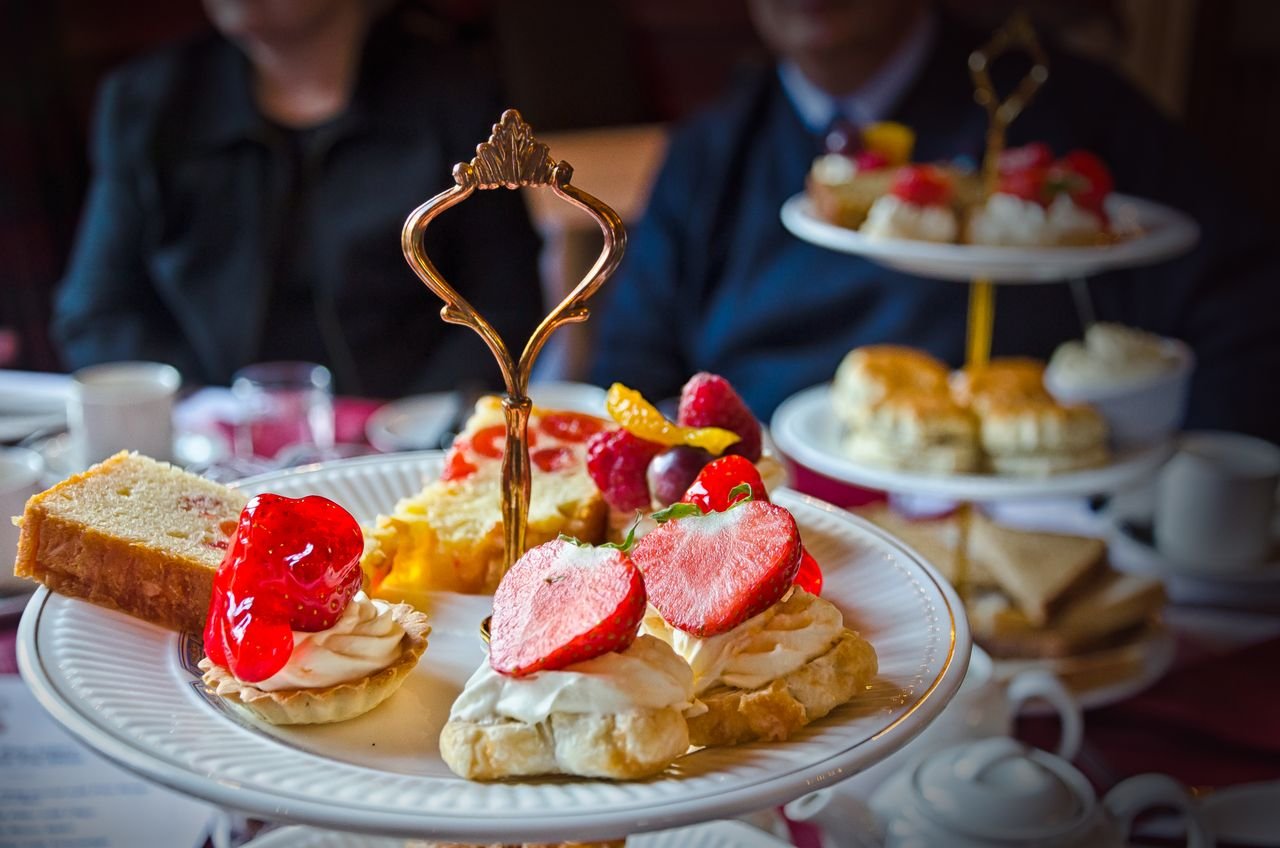
Few culinary traditions are as quintessentially British as afternoon tea. From fine porcelain cups to delicate cucumber sandwiches and clotted cream, the ritual evokes images of aristocratic elegance and timeless British identity. Yet, despite tea’s deep association with the United Kingdom, it is neither native to the British Isles nor an ancient tradition.
The custom of afternoon tea was born in the mid-19th century—a high-society invention that bridged a daily hunger gap, transformed royal fashion, and cemented tea as a cornerstone of British national identity.
Catherine of Braganza: The Queen Who Made Tea Fashionable
To understand how afternoon tea developed, one must first look at how tea became popular in England. When the Portuguese princess Catherine of Braganza married King Charles II in 1662, she brought a trunk of Chinese black tea as part of her dowry.
At the time, tea was an exotic, heavily taxed luxury consumed primarily for medicinal purposes. Queen Catherine brought her daily tea-drinking habit to the royal court, turning the exotic foreign leaf into the ultimate status symbol among the English aristocracy.
Anna Maria Russell: Solving the “Sinking Feeling”
While royal court drinking laid the groundwork, the formal ritual of afternoon tea was invented in 1840 by Anna Maria Russell, the 7th Duchess of Bedford and a close friend of Queen Victoria.
During the 1830s and 1840s, industrialization and kerosene lamps allowed wealthy households to push dinner later into the evening—often as late as 8:00 PM. This left a massive four-to-five-hour gap between lunch and dinner. The Duchess frequently complained of a “sinking feeling” in her stomach during the late afternoon.
To stave off her hunger, she requested that her butler bring a tray of black tea, bread and butter, and small cakes to her private dressing room at Belvoir Castle around 4:00 PM.
"The Duchess found the late-afternoon tea so refreshing that she began inviting her aristocratic friends to join her. Within months, London high society had embraced the practice."
When Queen Victoria herself adopted the trend, hostesses across the British Empire began hosting elaborate “at home” afternoon teas, turning a private private snack into an essential social performance.
The Anatomy of a Traditional Afternoon Tea
By the late Victorian era, the protocol of afternoon tea had evolved into an exacting art form. Serving the meal on a traditional three-tiered stand served a practical purpose, moving from savory to sweet:
| Tier Level | Serving Items | Cultural Etiquette & Detail |
| Bottom Tier (Savory) | Finger sandwiches (Cucumber, smoked salmon, egg & cress) | Crusts removed, cut into neat rectangular fingers or triangles. |
| Middle Tier (Warm) | Freshly baked scones, clotted cream, fruit preserves | Served warm; broken by hand rather than cut with a knife. |
| Top Tier (Sweet) | Petit fours, macarons, miniature Victoria sponges | Delicate sweet treats designed to finish the meal. |
Afternoon Tea vs. High Tea: Clearing the Confusion
In modern global dining, the terms Afternoon Tea and High Tea are frequently conflated, yet historically they belonged to opposite social classes:
-
Low/Afternoon Tea: Enjoyed by the aristocracy around 4:00 PM while sitting on low, comfortable parlor chairs. It consisted of delicate snacks meant to stave off hunger before a multi-course dinner.
-
High Tea: A hearty, hot evening meal eaten around 5:00 or 6:00 PM by working-class families coming home from factories and farms. Eaten at high dining tables, it featured meat, pies, bread, cheese, and strong tea.
Tea and British Identity
How did a luxury invented for royals become the defining drink of the British public? As global trade expanded through the British East India Company, tea prices dropped, making it accessible to the working classes.
During World War I and World War II, tea was recognized as essential to national strength and morale. When the British government rationed food, tea was prioritized, ensuring that every citizen maintained access to their daily brew.
Today, afternoon tea remains a testament to British cultural history—a ritual born in royal bedchambers that grew into a world-famous symbol of hospitality, mindfulness, and social connection.